Your resume is too broad for the role
A general resume can look qualified on paper but still fail to signal the exact role, level, and business problems the hiring team cares about.
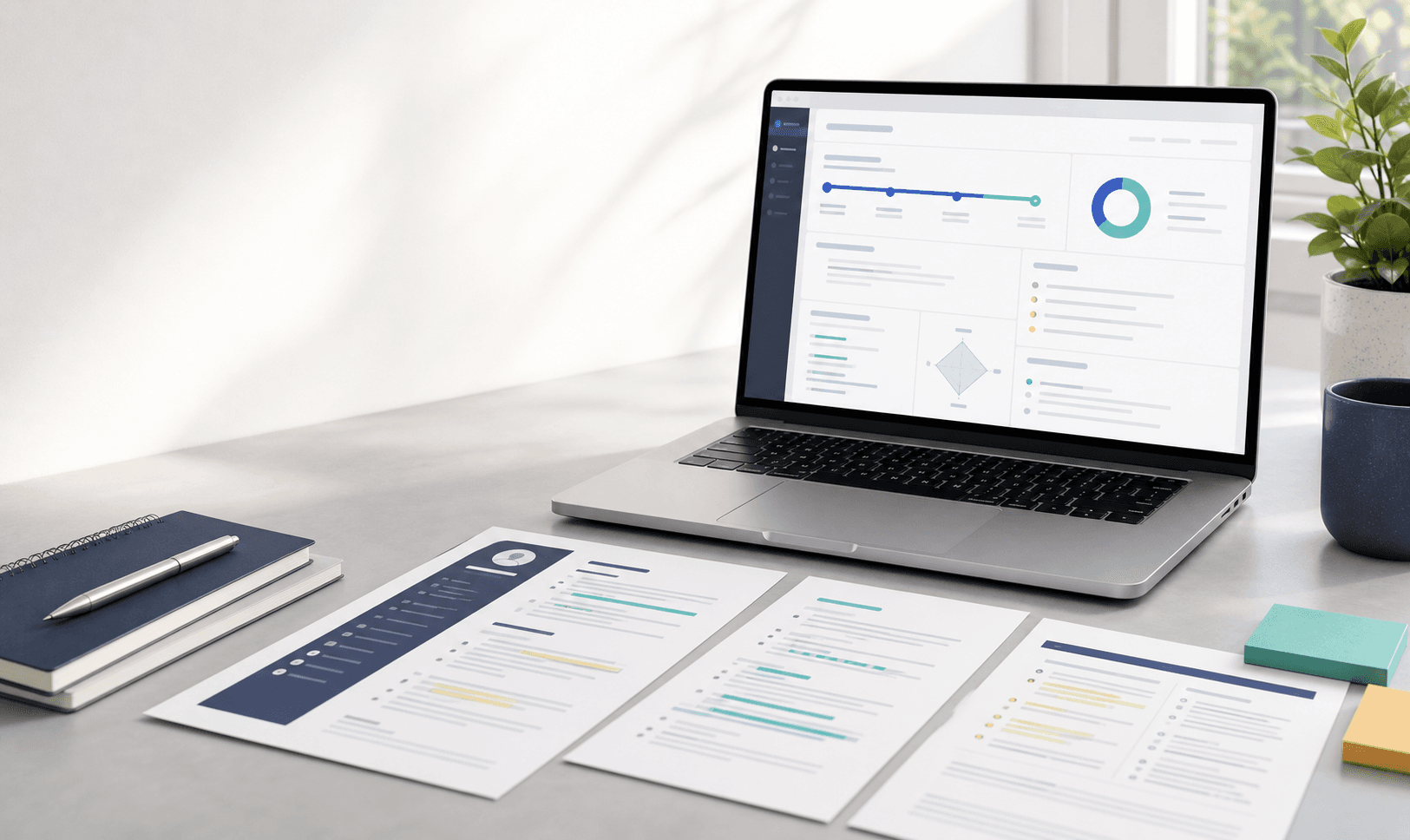
Resume not getting interviews
The problem is not always your experience. Often, your resume is failing to show the right evidence for the role. Diagnose the blockers before you keep applying.
Generic resume advice misses the actual hiring signal. The target JD is the benchmark.
Strong rewrites should clarify real work, not add fake metrics, titles, or outcomes.
The goal is a clearer resume for your next batch, not endless guessing.
Why it happens
If you have sent 20, 50, or 100 applications with few callbacks, your resume may be sending the wrong signal. These are the issues worth checking first.
A general resume can look qualified on paper but still fail to signal the exact role, level, and business problems the hiring team cares about.
Recruiters scan quickly. If the most relevant project, metric, tool, or domain signal appears too low, the resume may be filtered before the fit is obvious.
A resume should reflect the job description, but only with terms that match real experience. Forced keywords can make the resume weaker.
Lines like "worked on reports" or "helped the team" rarely explain scope, decision value, tools, or impact.
International applicants, career switchers, and junior candidates often need clearer framing so the resume reads like a fit, not a collection of disconnected experience.
Diagnosis process
A useful resume diagnosis should answer one question: why might this specific resume fail for this specific job?
Compare the resume against one real job description, not a generic job title.
Look for the skills, tools, outcomes, and business context repeated in the job post.
Check whether the first half of the resume proves those signals quickly.
Rewrite weak bullets using only facts already present in the resume.
Decide what to fix before sending the next 10 applications.
ApplyPitch
Upload your resume and paste one target job description. ApplyPitch returns an interview-readiness score, likely blockers, keyword gaps, and one rewrite example.
Quick checklist
If your resume is not getting interviews, pause the volume play for one hour and check these items.
The top third of the resume clearly matches the target role.
The most relevant tools and skills appear in natural context.
Each important bullet explains scope, method, or outcome.
The resume uses job-description language only when truthful.
Older or unrelated experience does not crowd out stronger evidence.
The file is a clean PDF, DOCX, or TXT resume that can be parsed.
FAQ
Common reasons include unclear role fit, missing job-description keywords, weak evidence near the top of the resume, task-only bullet points, or applying to roles that do not match the resume positioning.
No. A resume diagnosis can improve clarity, targeting, and role fit, but it cannot guarantee interviews, job offers, ATS approval, or hiring outcomes.
You do not need to rewrite everything. For serious applications, you should adjust the summary, top skills, project order, and the most relevant bullets so they match the target job truthfully.
ApplyPitch shows what the parser can read from your resume, then compares it with one target job description to highlight likely no-interview blockers, keyword gaps, positioning issues, and rewrite opportunities.